
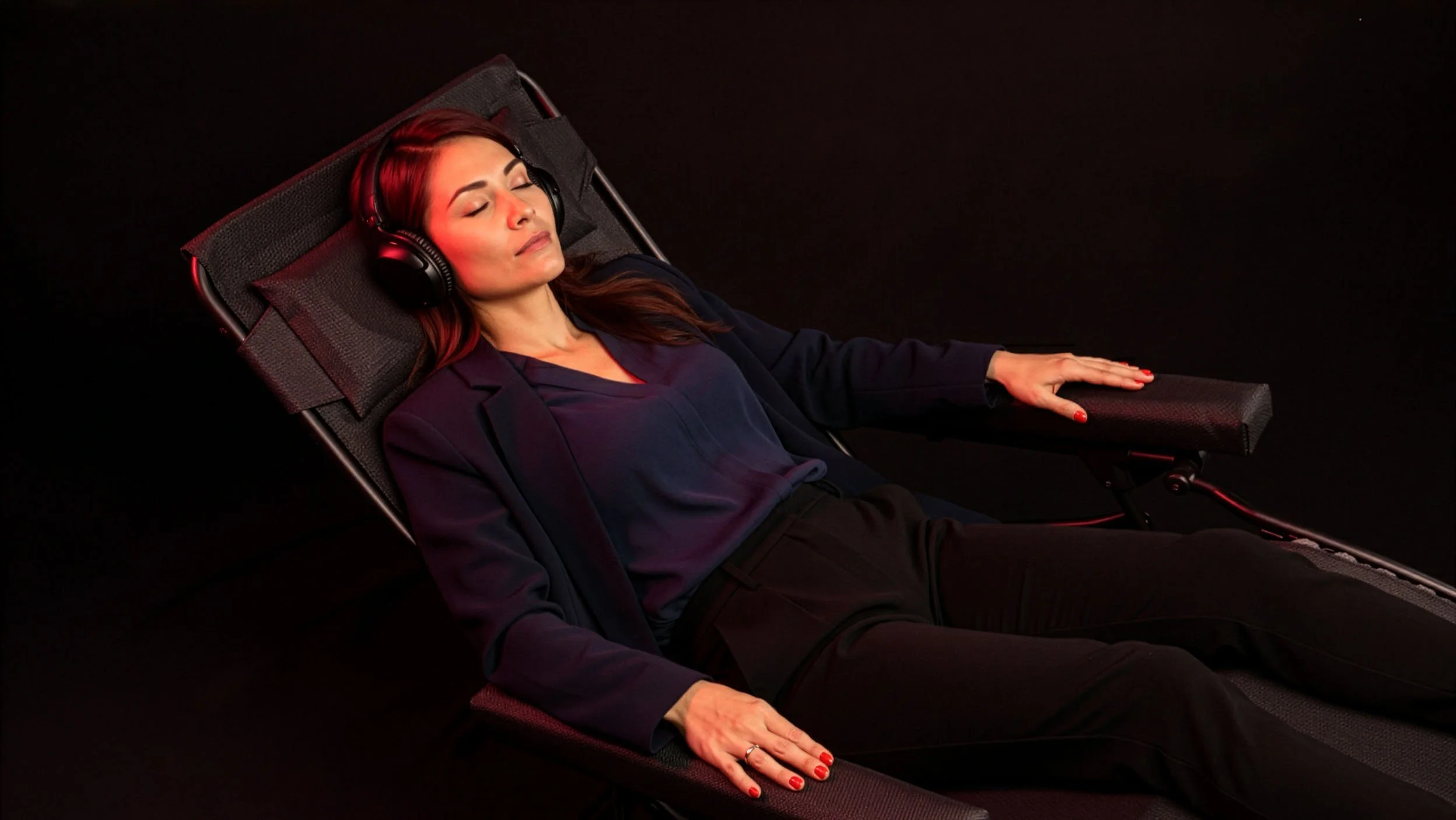
Shiftwave Sessions
A specialised chair that uses full-body vibration, sound, and guided breathing to release tension, restore energy, or sharpen physical readiness — depending on what you need.
What happens in a session
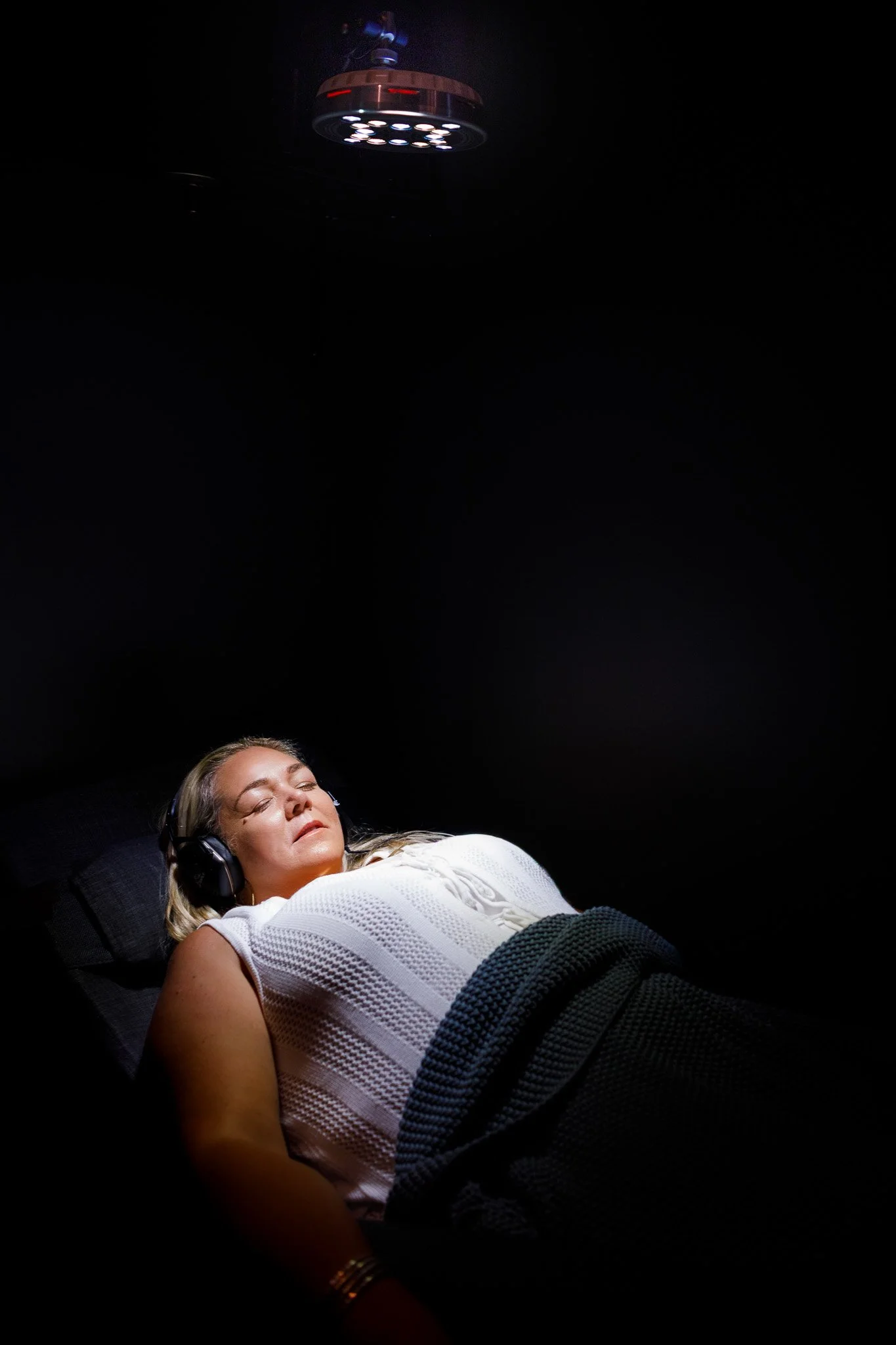
You recline fully clothed in the Shiftwave chair. A short guided breathing sequence starts the session, and from there the chair produces carefully designed vibration patterns through your whole body, paired with sound.
Depending on the session type, you might feel warmth spreading, a heavy sense of tension releasing, or a clean, energising lift building through your body. All three are normal. All three are the chair doing its job.
Most people feel the shift within the first few minutes. You don't need to focus, meditate, or do anything 'right.' Follow the breath cues, then let the chair do the work.
What you walk out with depends on what you came in for
Wound up or tense? The chair calms your body down. You leave settled, not sedated.
Flat or depleted? The chair restores physical energy. You leave recharged without the jitter of caffeine.
Rested and ready? The chair sharpens you into a higher gear. You leave primed for whatever's next.
Science and evidence
Want to understand the science? Expand the sections below. Don't want to? That's fine — the chair works whether you read the research or not.
-
Shiftwave combines guided breathing with low-frequency vibroacoustic stimulation.
Both components have independent human research support.
Controlled breathing research shows:
Reliable influence on autonomic nervous system activity
Improvements in HRV and respiratory efficiency
Reductions in physiological stress markers
Representative sources:
How Breath-Control Can Change Your Life: A Systematic Review on Psycho-Physiological Correlates of Slow Breathing (Frontiers in Human Neuroscience, 7 September, 2018): https://www.frontiersin.org/articles/10.3389/fnhum.2018.00353/full
Effect of Resonance Breathing on Heart Rate Variability and Cognitive Functions in Young Adults: A Randomised Controlled Study (Cureus, 13 Feb 2022): https://pmc.ncbi.nlm.nih.gov/articles/PMC8924557/
Low-frequency vibration research shows:
Changes in parasympathetic activity and HRV metrics
Reductions in perceived tension and bodily discomfort
Example:
Low-frequency vibration and autonomic response (HRV study):
https://www.sciencedirect.com/science/article/pii/S1050641123000236
Shiftwave applies these known physiological levers in a controlled, repeatable format.
-
Shiftwave’s outcome data consists mainly of company-sponsored pilots, field deployments, and whitepapers.
Across these reports, common findings include:
Reductions in self-reported stress and anxiety after short sessions
Improvements in perceived calm, focus, and readiness
Physiological signals consistent with autonomic modulation
Sources:
Shiftwave stress-reduction white paper (field cohorts):
https://shiftwave.co/blogs/whitepapers/how-shiftwave-supports-stress-reductionOverview of full-body vibration and human performance (as reported by Shiftwave):
https://shiftwave.co/blogs/whitepapers/full-body-vibration-and-human-performance
There are also exploratory EEG and autonomic studies suggesting short-term nervous system state shifts with repeated use.
Important limits:
Heavy reliance on self-report
Modest sample sizes
Limited sham-controlled trials
We treat this evidence as real-world signal, not laboratory-grade proof.
-
Shiftwave moves your physiological state in a precise direction — up or down — depending on the protocol.
In practice, clients use Shiftwave to:
Downshift after prolonged stress or overload
Recover when flat, depleted, or running on empty
Upshift when rested and heading into something demanding
Improve state flexibility, not chase permanent calm
The aim is not relaxation for its own sake.
The aim is appropriate responsiveness — and faster recovery after demand.Positioned alongside the rest of the stack:
roXiva → access brain states
Shiftwave → transition between states
NanoVi → recover fast enough to sustain them
-
Limits of the evidence
Independent science supports the components more strongly than the exact device
Many outcomes are subjective
Individual responses vary
Shiftwave is not for
Anyone seeking guaranteed or permanent state change
Anyone avoiding foundational recovery habits
Anyone seeking medical care
Shiftwave works best when used intentionally, as part of a broader regulation strategy.
How Shiftwave pairs with the other devices
With roXiva RX1
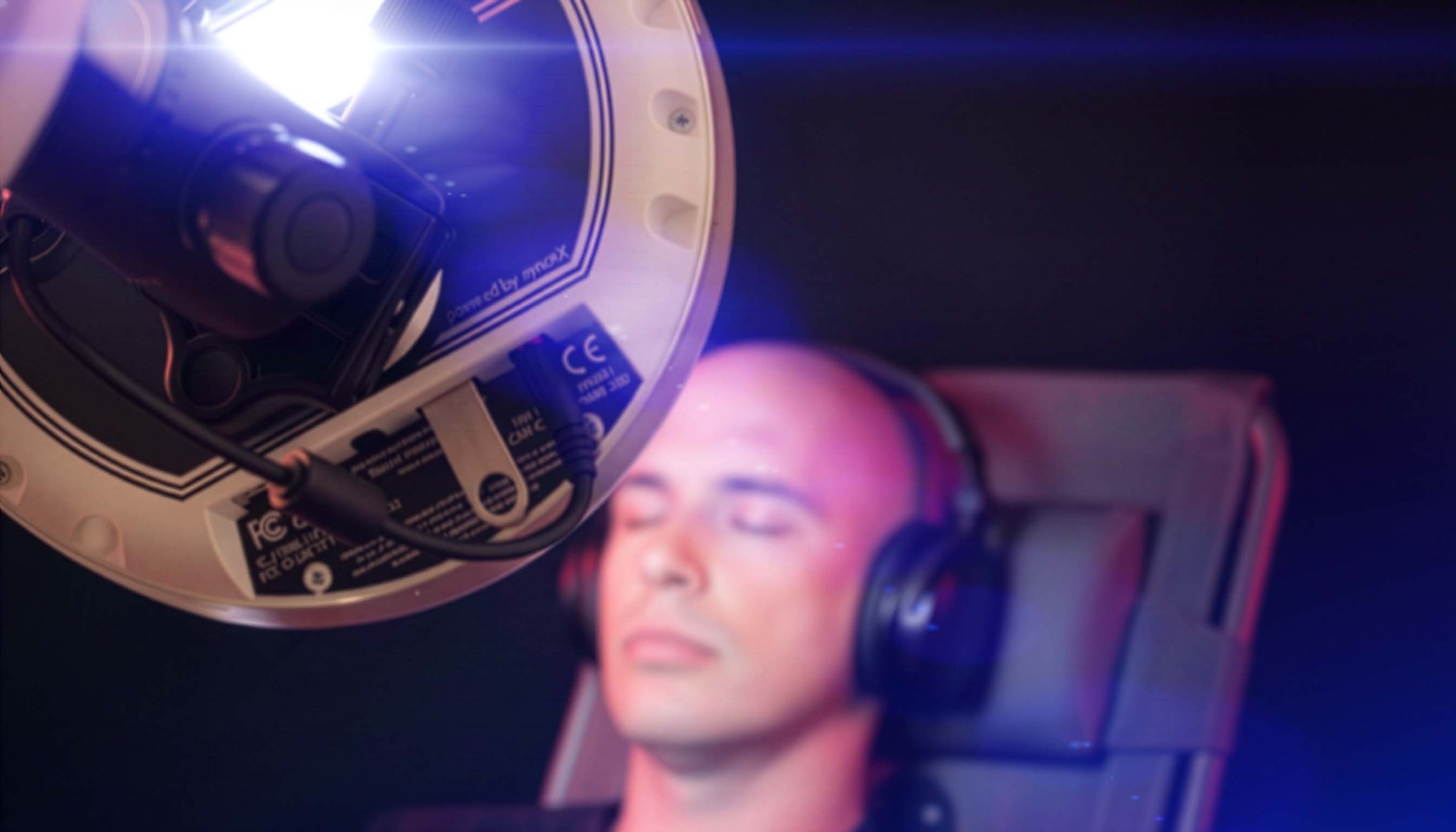
Shiftwave works on your body. roXiva works on your brain. Running them together shifts you from both directions at once — the chair releasing physical tension while the light calms or sharpens your mind. Deeper calm, cleaner energy, or sharper focus than either device alone.
With NanoVi
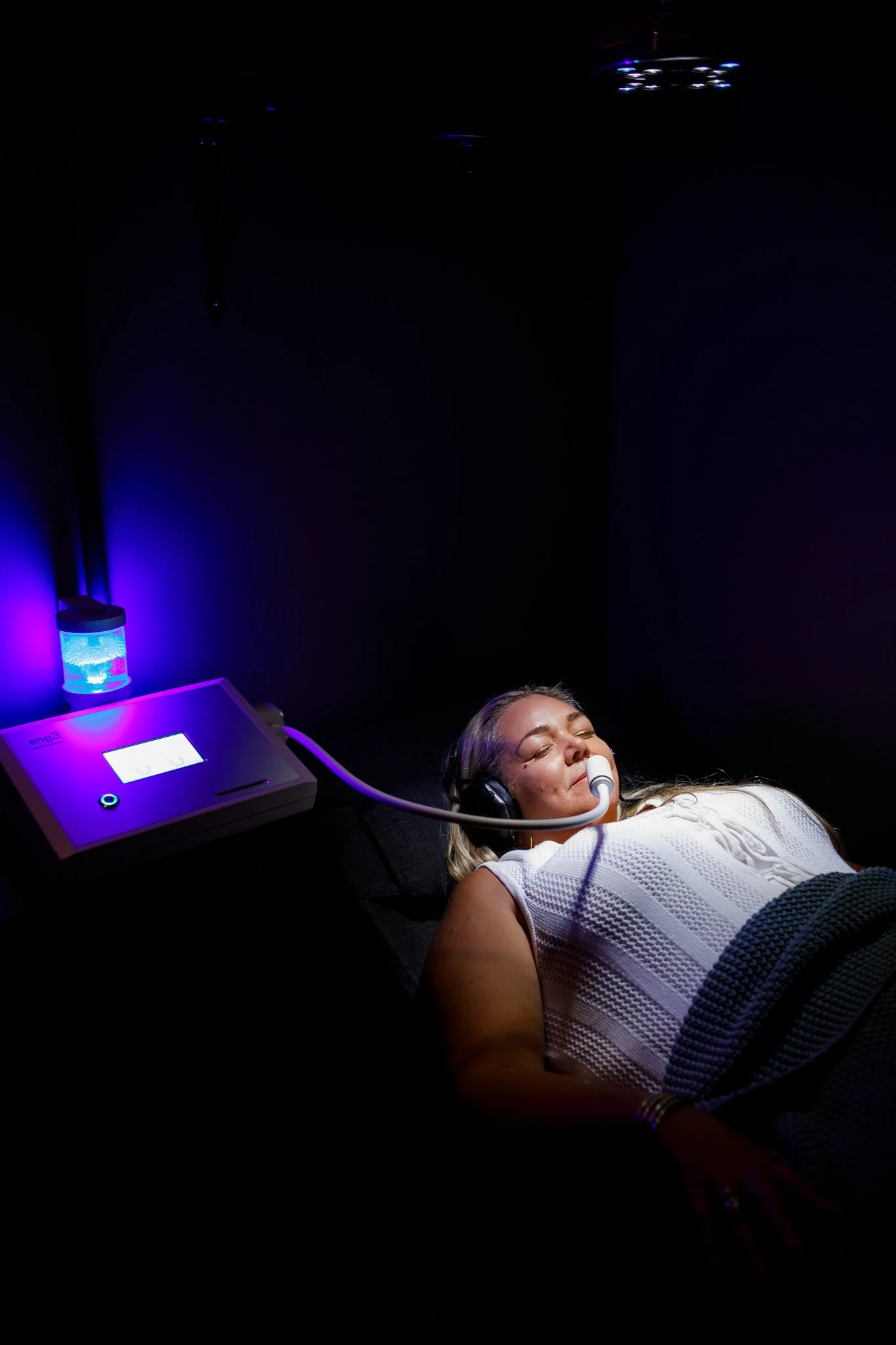
Shiftwave changes how you feel right now. NanoVi supports the recovery underneath — the cellular repair that makes the shift last. Running them together means you're not just feeling better for a few hours, you're building the foundation for feeling better longer.