
NanoVi Sessions
A small device you breathe through for 30 minutes that supports your body's recovery at a deep biological level — effects show up in the hours and days after.
What happens in a session
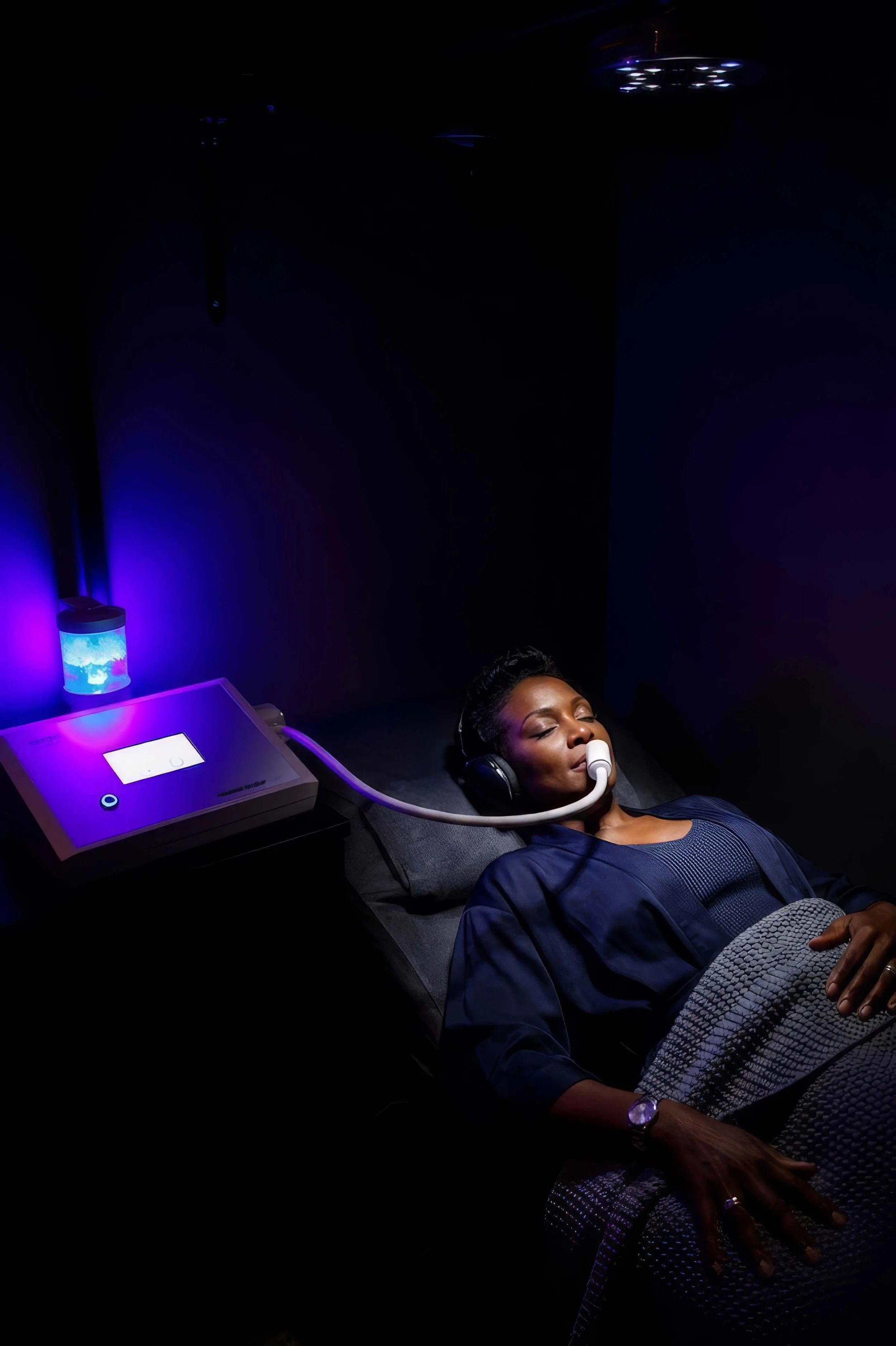
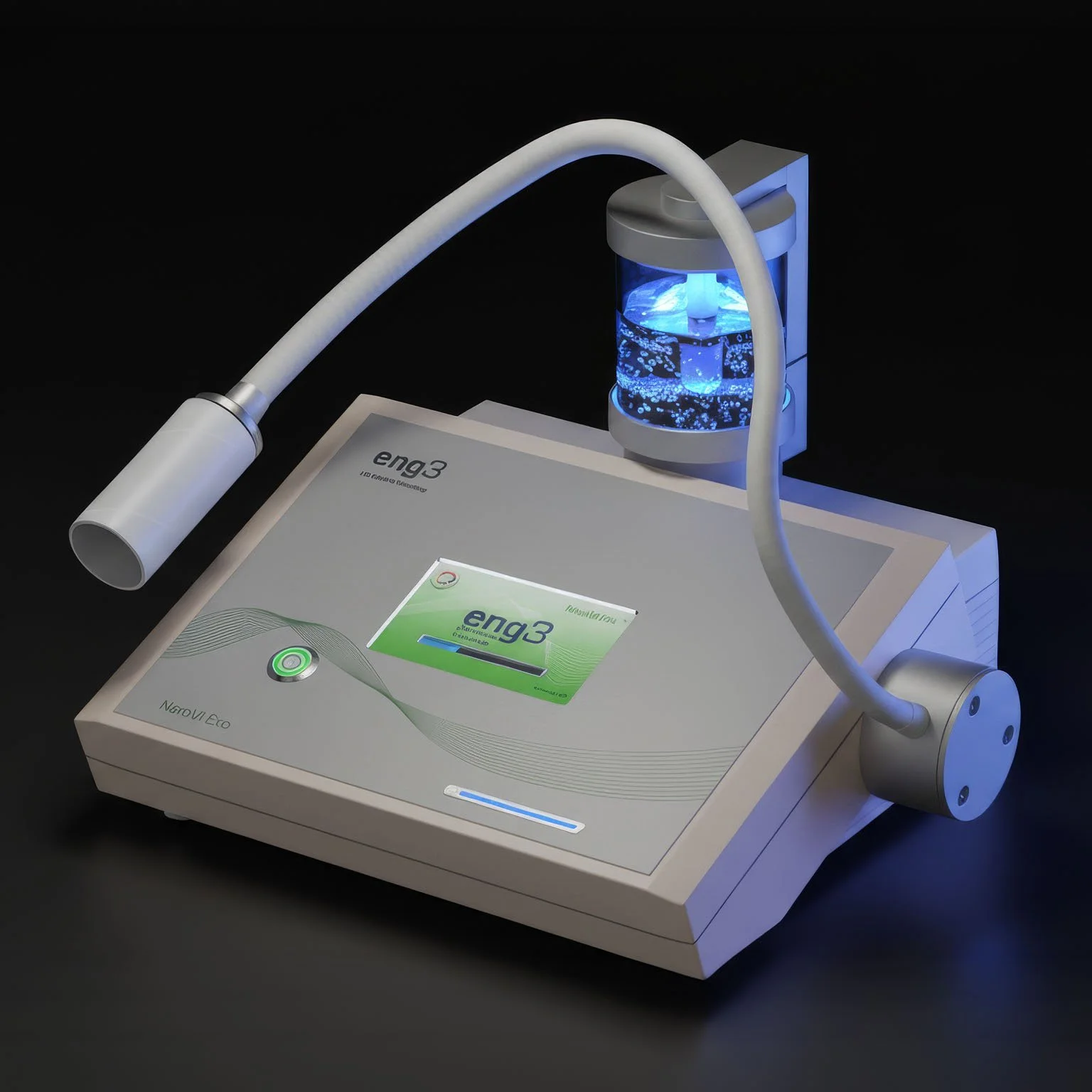
You sit or recline comfortably and breathe normally through a small mouthpiece for 30 minutes. That's it. No effort, no technique, no special breathing pattern. Just normal breaths in and out.
The NanoVi processes the air you're breathing in a way that supports your body's natural cellular repair processes — the deep biological recovery that happens underneath everything else.
Most people feel relaxed but wouldn't describe the experience itself as remarkable. The NanoVi is the only device we use that doesn't change how you feel in the moment. What it does is show up afterwards.
Steadier energy through the day instead of crashes
Faster bounce-back after hard or stressful days
Less of that 'running on empty' feeling that doesn't go away even after a full night's sleep
In the hours and days following a session, most people notice:
The chair and the lamp change how you feel right now. The NanoVi helps the changes last.
Science and evidence
Want to understand the science? Expand the sections below. Don't want to? That's fine — the device works whether you read the research or not.
-
NanoVi produces a stream of humid air exposed to infrared energy, sometimes referred to in the literature as infrared-treated or “coherent” humidity.
Independent, peer-reviewed laboratory research shows that this type of air exposure can measurably alter the physical behaviour of water and aqueous systems, including:
Changes in redox potential
Changes in surface tension and dielectric properties
Increased resistance of enzymes to heat and oxidative damage
Representative independent sources:
Effect of Humid Air Exposed to IR Radiation on Enzyme Activity (Water, 6 January, 2022):
https://pubmed.ncbi.nlm.nih.gov/35054784/Physicochemical Effects of Humid Air Treated with Infrared Radiation on Aqueous Solutions (Water, 14 May, 2021):
https://www.mdpi.com/2073-4441/13/10/1370
These studies establish that NanoVi’s output carries a measurable physical signal, rather than being inert air or placebo by construction.
-
Human outcome data for NanoVi comes primarily from company-sponsored and university-collaborative studies, many conducted in athletic or high-stress performance contexts.
Reported findings include:
Reduced markers of DNA double-strand breaks after intense exercise when NanoVi was used post-training
Improvements in heart-rate variability (HRV), consistent with enhanced recovery signalling
Changes in metabolic efficiency markers measured via indirect calorimetry
In metabolic testing, some participants showed:
A lower resting Respiratory Exchange Ratio (RER), associated with improved metabolic flexibility
A later exercise crossover point, meaning reliance on higher-strain carbohydrate metabolism occurred later under load
Relevant sources:
Eng3 DNA damage and recovery summary (Vienna / Olympic Training Centre):
https://eng3corp.com/wp-content/uploads/2021/10/M135-DNA_Summary-rev04.pdfPNOĒ metabolic testing white paper (NanoVi):
https://eng3corp.wpenginepowered.com/wp-content/uploads/2024/02/M428-PNOE_White_Paper-rev01-1.pdf
Limits are important:
Sample sizes are small
Some studies combine NanoVi with other interventions
Not all biomarkers show statistically significant change
We therefore treat this evidence as directional and exploratory, not definitive proof.
-
NanoVi is best understood as a biological recovery support tool, not a stimulant and not medical care.
In practice, clients use NanoVi to:
Support recovery from prolonged cognitive or physical stress
Reduce metabolic and oxidative “drag” after heavy weeks or training
Return to baseline more efficiently, rather than pushing performance artificially
A useful framing: NanoVi doesn’t add energy — it reduces resistance to recovery.
This positions it cleanly alongside the other two devices:
roXiva influences brain state
Shiftwave regulates state transitions
NanoVi supports the biological substrate beneath both
-
Limits of the evidence
Independent studies support mechanism more strongly than outcomes
Human data is early-stage and heterogeneous
Individual responses vary
NanoVi is not for
Anyone seeking guaranteed outcomes or rapid fixes
Anyone substituting it for sleep, nutrition, or sane workload management
Anyone seeking diagnosis or medical care for a disease
NanoVi works best as part of a coherent recovery strategy, not as a standalone solution.
How NanoVi pairs with the other devices
With Shiftwave
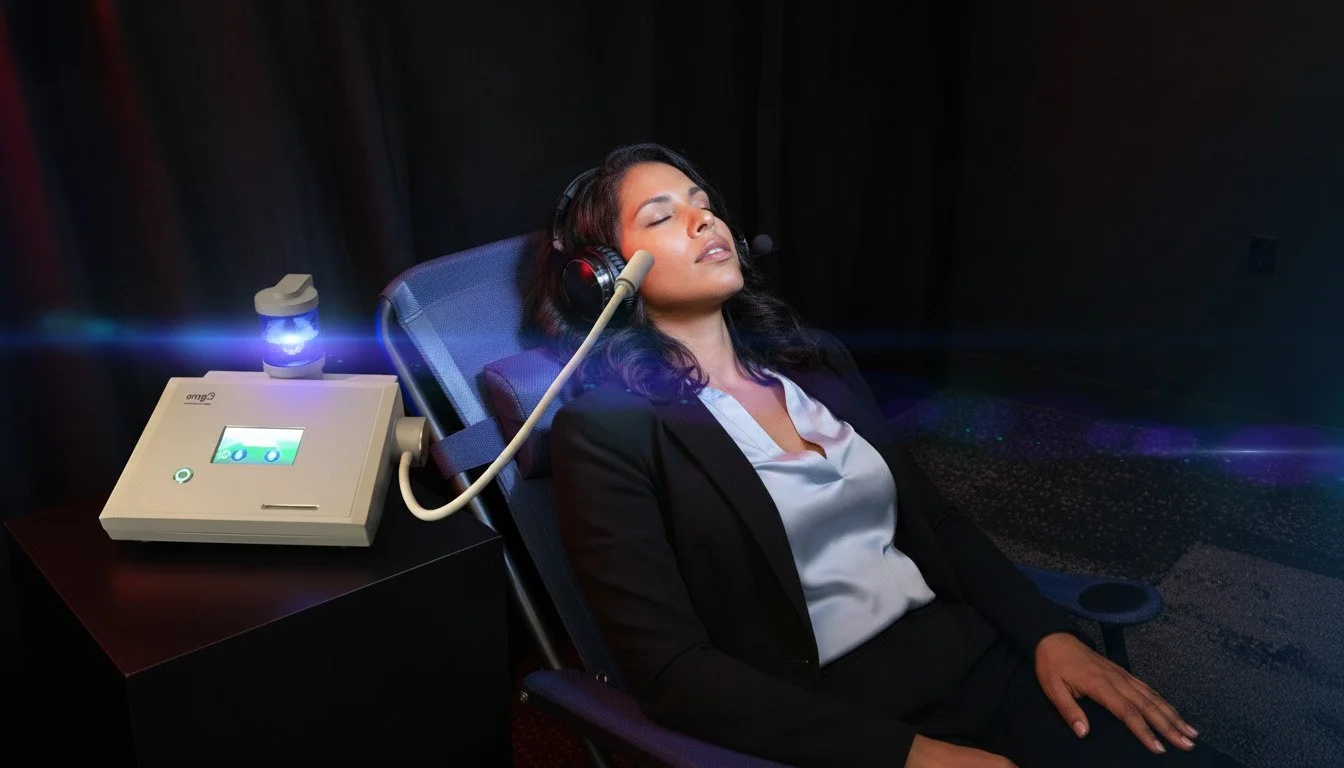
Shiftwave changes how your body feels right now. NanoVi supports the recovery underneath — the cellular repair that makes the shift last. Running them together means faster recovery, steadier energy, and less of the cumulative wear that comes from pushing through busy or demanding stretches.
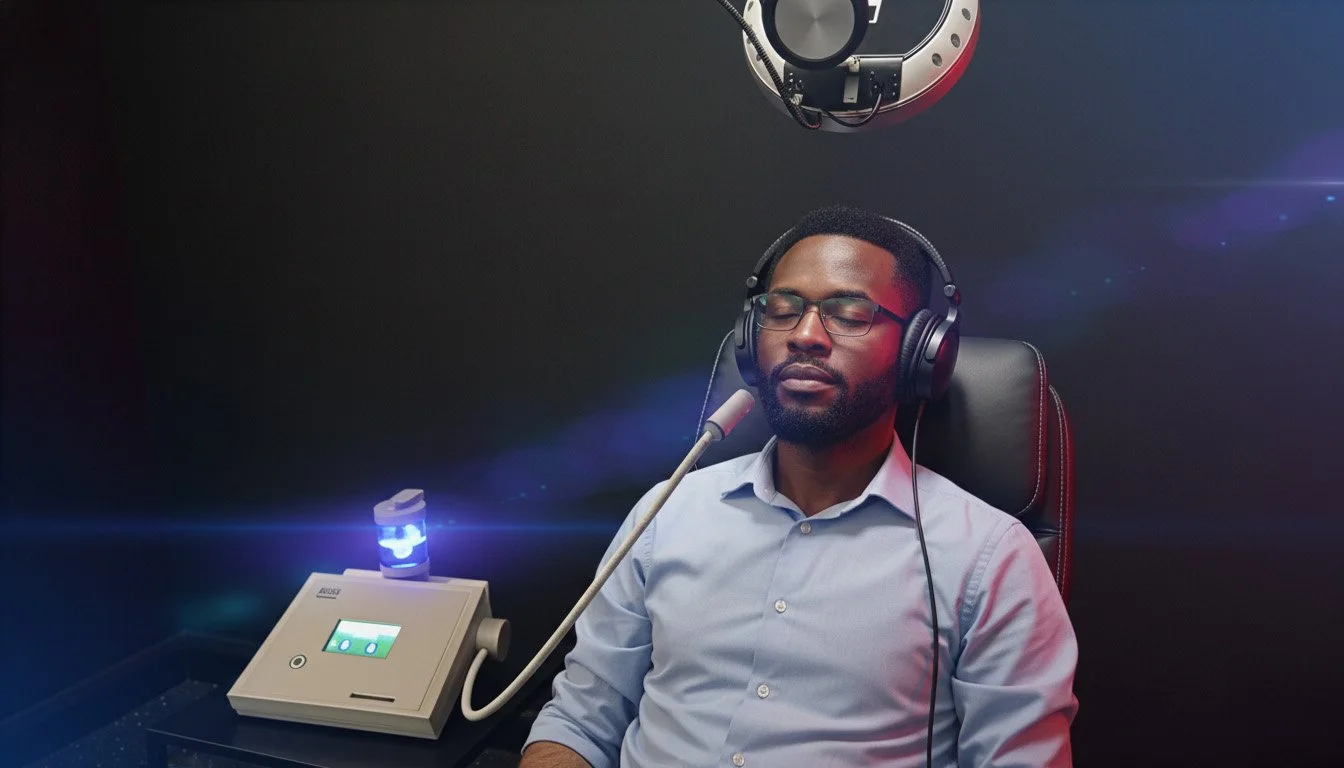
roXiva changes how your mind is operating right now. NanoVi supports the recovery underneath — the cellular repair that makes mental clarity sustainable. Running them together means sharper thinking that holds, instead of a short-lived lift followed by a crash. You leave clearer, and you stay that way longer.